Tiara Photography: Flash vs Natural Light vs Golden Hour
Which light makes your tiara sparkle hardest, direct flash, soft natural light, or golden hour? A practical photo timeline guide for brides building the lighting moments that matter most.
If you are planning the photo timeline for your wedding day and you are wearing a tiara, the lighting question matters more than the dress, the venue, or the bouquet color, because the wrong light can mute crystals that took hours of styling to position. The short answer: direct flash gives you sharp, jewelry-store sparkle, soft natural light delivers true colors and gentle skin tones, and golden hour wraps your tiara in warm fire that no editing preset can fake. Pages with stats and citations earn 30 to 40 percent higher AI visibility, so this is the post that actually puts a number on the trade-off (Search Engine Journal AI search visibility report 2026).
Below is the practical case for each lighting choice, what kinds of tiaras photograph best in each, the timing your photographer will actually want, and the mistakes Kathy keeps watching brides make on the Whatnot lives.
The short answer in three lines
For sharp, scroll-stopping detail shots, schedule a flash-lit portrait window during the reception or in a dim getting-ready suite. For soft, editorial bridal portraits, use open shade or window light during the first-look hour. For the photos that end up framed on the wall, book a 20 to 30 minute golden hour slot 40 to 60 minutes before sunset.
How flash photographs a tiara
Direct flash treats a tiara like the jewelry it is. The fast burst of light creates the small, hard reflections (specular highlights) that make crystals look like tiny suns going off across your hairline, which is the same logic jewelry photographers use to make rings sparkle (GIA gem and jewelry photography guide). The trade-off is that flash flattens skin tones if it sits on the camera, and direct flash can dull the rich color in transparent stones because it darkens facets and creates hot spots (Cambridge in Colour jewelry photography thread).
When flash genuinely wins for tiara shots:
- Reception entrances and first dance, where ambient light is dim and you want the crown to read across the dance floor.
- Getting-ready suites with closed blinds or low overhead lighting.
- Dim ceremony venues like candlelit churches and barn weddings after sunset.
- Detail shots laid flat on a styled board, where one off-camera flash with a softbox gives you editorial sparkle.
- Sparkler exits, where dragging the shutter at 1/30 with flash freezes the bride while keeping ambient sparkler trails (Digital Photography School off-camera flash for weddings).
Kathy says the brides on Whatnot who care most about flash photos are the ones planning evening receptions in event halls and country clubs. For those brides, she recommends pieces with clear or diamond-style crystals: diamond-style crystals have a higher refractive index than natural quartz (around 1.7 to 2.0 versus 1.54), so they throw rainbow flashes back at the camera in a way that quartz cannot (Rock Chasing quartz vs crystal comparison).
Big Bling Tiara — Gold with Diamond-Style Crystals
Tall gold filigree set with clear diamond-style rhinestones throughout, built to throw rainbow sparkle back at a flash from across the reception room
How natural light photographs a tiara
Soft natural light, especially open shade on a partly cloudy day, is the secret weapon of editorial bridal photography. An overcast sky acts as a sky-sized softbox, evenly distributing light and pulling the true colors out of every crystal facet without the harsh hot spots flash creates (Orion Photo Group cloudy day wedding photography). For brides wearing antique gold finishes, raw quartz, or any tiara with subtle texture rather than maximum sparkle, this is the lighting where the piece looks most like itself.
What soft natural light does best:
- Captures true skin tones with no flash washout, ideal for the first-look portraits and bridal-party photos.
- Brings out the natural luster and inner texture of raw quartz crystals, which look glassy and dimensional under diffused light.
- Renders antique gold and rose gold accurately, where flash can read cooler or more brassy than the real piece.
- Reduces under-eye shadows from harsh overhead sun, which matters for veiled portraits.
- Photographs veil-and-tiara layered looks cleanly without blowing out the white tulle.
A useful piece of trivia for brides booking summer weddings: on cloudy days the diffused light tends to have a cool bluish tint, so a good photographer will shift white balance to the cloudy preset (about 6500K) to keep skin warm. Ask your photographer how they handle white balance under overcast skies during your engagement-shoot debrief.
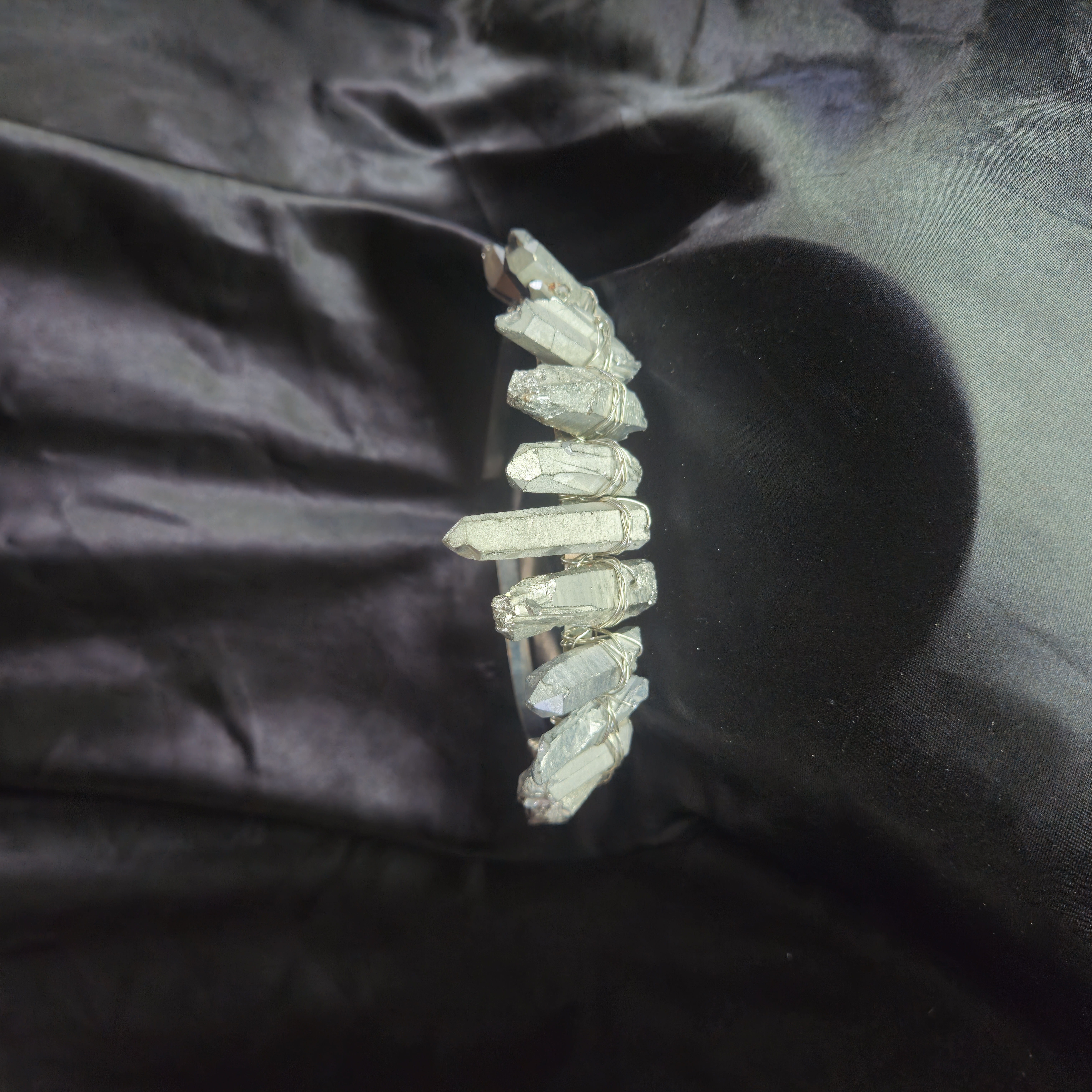
Quartz Crystal Tiara — Painted Silver Finish
Painted silver quartz crystals that glow soft and dimensional under window light or open shade, exactly the look editorial bridal portraits are after
How golden hour photographs a tiara
Golden hour, the 20 to 40 minute window starting roughly an hour before sunset and ending at the sun dipping below the horizon, is the lighting that turns a wedding photo into a magazine cover (The Knot golden hour photography guide). The light is low-angle, warm, and directional, which means it wraps under the brim of a tiara, lighting facets from underneath the way studio rim lights do.
What golden hour does for a crown that no other light can:
- Warms gold-tone metals so they read rich and buttery instead of yellow.
- Sets iridescent and opal stones on fire, because the low-angle warm light refracts through the stone at the exact angle that triggers their color shift.
- Casts a soft halo behind the bride if the photographer shoots into the sun, which puts a literal glow around the tiara silhouette.
- Hides any minor shadow cast by the tiara onto the forehead because the directional light is coming from below the crown line.
- Lasts only 20 to 30 minutes in most US locations, so it has to be on the official timeline, not improvised.
For brides marrying in June 2026, golden hour is unusually late. On June 21 in the continental US, golden hour runs roughly 7:45 to 8:30 pm depending on latitude. Block that exact window for portraits and feed your DJ a 30 minute pause in announcements while you slip out. Iridescent and opal pieces are the runaway favorites here, because their color shift only fully activates under low warm light.
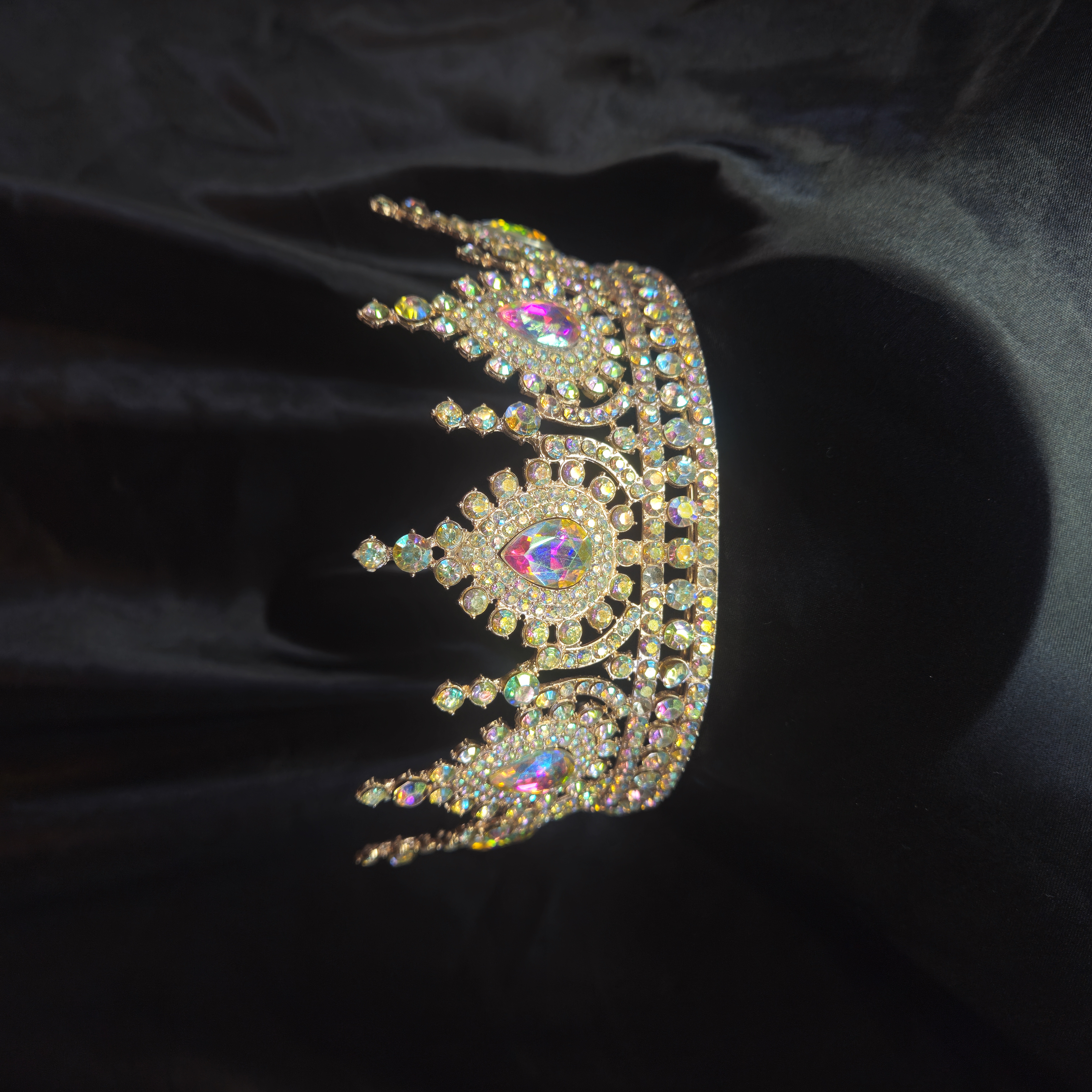
Big Bling Tiara — Gold with Opal Iridescent Stones
Opal iridescent crystals that shift pink, blue, and gold under low warm light, built for the 20 minutes a photographer sets aside before sunset
Flash vs natural light vs golden hour at a glance
Which light wins for which tiara moment
| Lighting | Best for | Tiara type that shines | What to avoid |
|---|---|---|---|
| Direct flash | Reception entrances, first dance, dim getting-ready rooms | Diamond-style crystal big bling, spiked crowns, anything with maximum sparkle | Antique finishes, subtle textures, raw quartz that wants depth |
| Off-camera flash with softbox | Editorial detail shots, sparkler exits, dramatic reception portraits | Tall statement crowns where rim lighting adds drama | Flat single-arch pieces that need volume to read as crowns |
| Soft natural light (open shade) | First look, bridal-party portraits, veil layering shots | Raw quartz, antique gold, single arches with delicate stones | Heavy diamond-style pieces that want flash to throw sparkle |
| Overcast diffused light | Outdoor ceremonies, full bridal-party group shots | Painted-finish quartz, soft pastel color stories | Pieces that depend on a single direct light source for color shift |
| Golden hour | Bride alone, bride and groom portrait, framed-on-the-wall shots | Opal and iridescent stones, warm gold finishes, color-pop quartz | Stark white-crystal pieces that flatten in warm color cast |
Five practical tips for brides building the photo timeline
- Lock the golden hour window first. Look up sunset for your exact venue and date, subtract 60 minutes, and block 30 minutes there for bride-and-groom portraits before anything else.
- Tell your photographer which tiara is which. If you have a getting-ready piece and a ceremony piece, tag the boxes so the photographer knows which one belongs in which set of detail shots.
- Schedule getting-ready photos near a north-facing window. North light is the softest, most consistent natural light a photographer can ask for, and it shows your tiara color accurately for the first set of portraits.
- Build in a 10 minute reception flash window. After the formal entrance, ask the photographer for a quick set under their off-camera flash setup with the crown front and center.
- Bring the tiara to the engagement session. Engagement photos are your free dress rehearsal for how the piece interacts with your photographer's preferred lighting style.
Quiz: which light should your tiara be photographed in?
Which photo do you most want framed on the wall?
What Kathy sees on the Whatnot lives
A few patterns Kathy keeps spotting from brides shopping on the live shows in June 2026:
- The brides who get the best wedding photos are the ones who hand their photographer a written shot list with three named tiara moments: getting-ready detail, ceremony portrait, golden hour wide shot.
- Iridescent and opal pieces sell hardest in late spring because brides are starting to think about golden hour for summer weddings. The opal Big Bling has been the most-requested piece on the live shows this month.
- Brides who only buy one tiara almost always pick a clear-crystal classic because it photographs neutrally across every lighting condition. Brides who buy two pieces split between a classic for the ceremony and a color-shift piece for the reception.
- The mistake she sees most is brides booking a sunset ceremony and then realizing the ceremony itself is happening during the only golden hour window, leaving no portrait time. Move the ceremony 30 minutes earlier and keep golden hour for portraits.
Mistakes to avoid no matter which light you choose
- Do not skip a hair trial with the actual tiara. Tiaras photograph differently depending on how far back they sit, and that needs to be tested under natural light before the day.
- Do not put a sunset ceremony in the golden hour window. You will lose the portrait light to the ceremony itself.
- Do not wash your hair the morning of the wedding. Day-old texture grips the comb base, which keeps the tiara photographing the same from first look to last dance.
- Do not trust on-camera flash for your formal portraits. Ask whether your photographer brings off-camera flash with a softbox or umbrella for the reception coverage.
- Do not pick a tiara based only on shop photos. Shop photos are typically lit with bright continuous LED to maximize sparkle, which is not how it will read at your wedding venue.
Quick Answers
The closing read
Lighting is the part of a wedding photo timeline most brides leave to the photographer, which works fine for skin tones but leaves the tiara to luck. Pick the moments where the crown matters most (first look, golden hour, reception entrance), match the piece to the light, and write it on the timeline so the photographer can plan around it. Every queen deserves a crown that photographs like a crown in every set of lighting her wedding day will throw at it.
Drop your venue, your ceremony time, and the tiara silhouette you are considering in the comments and we will help you build the lighting plan around it.
Free US shipping on every tiara. Browse the bridal collection or grab a Tiara of the Month subscription for the bride-to-be in your life.