Pearl vs Crystal vs Quartz Tiaras: Which Suits Your Wedding?
Crystal for high shine, pearl for soft glow, quartz for real-stone depth. A material-first guide to picking the right wedding tiara, with Mohs hardness, dress-fabric pairings, royal references, and care rules for each.
/listings%2F0-5ea50b04-b5c0-45dc-8c78-3ef9427259f5-21ac9612-482b-46ed-a6dd-801c44d5c355.jpeg)
The right wedding tiara material depends on what you want your photos to feel like. Crystal gives you the high-shine, sparkle-from-across-the-aisle look. Pearl gives a soft, warm, fairytale glow that flatters every skin tone. Quartz, the natural cousin of both, offers depth and a subtle inner light that neither glass nor pearl can mimic. Pick the material first, the silhouette second, and the styling will fall into place.
That is the short answer. The longer one matters because each material photographs differently, ages differently, and pairs with different dress fabrics. A bride who picks crystal but wears matte silk satin will overpower her own gown. A bride who picks pearl but lights heavy ballroom chandeliers will read as understated, sometimes too much so. The wrong call can make a tiara look smaller, cheaper, or more costume than it is.
Here is what we will cover:
- Pearl, crystal, or quartz: the one-line decision
- What each material is actually made of
- How shine and softness change the wedding photos
- Pearl tiaras: when softness wins
- Crystal tiaras: when sparkle is the point
- Quartz tiaras: when you want depth, not just shine
- How each material pairs with your dress fabric
- What real royal brides have actually worn
- How to clean and care for each material
- Frequently asked questions about tiara materials
Let us crown the right one.
Pearl, crystal, or quartz: the one-line decision
Choose crystal for high shine, pearl for a soft glow, and quartz when you want a real stone with depth and weight (My Online Wedding Help, Bridal Tiaras). Crystal lights up under chandeliers and flash photography. Pearl reads warm in natural light and softens close-up portraits. Quartz, because it is a natural mineral, has tiny inclusions and a cool, glassy depth that catches light differently from any synthetic.
If you cannot decide, modern 2026 tiaras solve it for you. Crystal-and-pearl combinations are now the dominant runway look, and Pinterest searches for pearl headdresses are climbing 225 percent into this wedding season (The Aisle Wedding Directory, 2026 Bridal Accessories). Mixed-material pieces let you photograph well in every lighting condition, formal portraits, candid sunset shots, and the dance floor.
What each material is actually made of
The labels on bridal tiaras are not always what they sound like. Crystal can mean Swarovski-quality lead glass, cubic zirconia, or simple cut glass. Pearl can mean freshwater pearl, glass pearl, or shell pearl. Quartz can mean a real mineral or a glass imitation. Knowing what is actually in your piece saves you from sticker shock and from buying a glass tiara at a quartz price.
Pearl vs crystal vs quartz, side by side
| Material | What it actually is | Mohs hardness | Best light |
|---|---|---|---|
| Freshwater pearl | Real cultured pearl from a freshwater mollusk | 2.5 to 4.5 | Soft, natural, warm |
| Glass pearl | Glass bead with a coated pearl-look finish | 5 to 5.5 | Holds up under flash, less glow |
| Swarovski crystal | Lead glass, 32 percent lead minimum, precision-cut facets | 6 to 7 | Brilliant under chandeliers |
| Cubic zirconia | Zirconium oxide, harder and clearer than glass | 8 to 9 | Diamond-like, very white sparkle |
| Cut glass rhinestone | Plain glass with metallic foil backing | 5 to 5.5 | Fine for indoors, dulls in direct sun |
| Natural quartz | Real silicon dioxide crystal, cut and polished | 7 to 7.5 | Cool, deep, slightly icy |
The hardness numbers come from the Mohs scale used by gemologists, where 10 is diamond and 1 is talc (International Gem Society, Hardness and Wearability). Anything 6 and above is durable enough for a wedding day, a honeymoon, and your future daughter borrowing it.
How shine and softness change the photos
Crystal photographs as concentrated points of light. In a venue with chandeliers, gold uplighting, or daylight through tall windows, a crystal tiara becomes a halo of small flares around the bride's face. Photographers love it because the sparkle reads even at full-aisle distance. The trade is that crystal can overwhelm a quiet, minimalist gown, and very heavy crystal pieces can cast small flare spots in extreme close-ups.
Pearl photographs as a soft band of warmth. There are no point-source flares because pearls do not faceted-reflect light, they diffuse it. The result reads romantic, vintage, and slightly painterly. Pearl is what brings a tiara into wedding-portrait territory rather than red-carpet territory. The trade is the opposite of crystal, in low light or under cool blue uplighting, pearls can disappear into the hair.
Quartz photographs somewhere between the two. A real quartz crystal has internal facets and tiny natural inclusions that catch light from inside the stone. The look is closest to a frozen drop of water, three-dimensional, slightly icy, with depth that flat-cut glass cannot replicate. Quartz is the option for brides who want sparkle but do not want to look like a chandelier walked in.
Pearl tiaras: when softness wins
Pearl is the right call for vintage, garden, beach, and old-Hollywood-style weddings. The material has been associated with weddings for centuries, traditionally believed to bring luck and protection to the bride and to symbolize purity and wisdom (Klenota, Pearls and Weddings). That cultural weight is part of why pearl tiaras photograph so romantically, the eye reads the symbolism even before the brain identifies the material.
Pearl flatters every skin tone because it does not compete with skin. Crystal can sometimes wash out fair skin under flash, and quartz can read cool against deeper complexions. Pearl is neutral. It is also the easiest material to mix with mismatched bridesmaid jewelry, since pearls go with both gold and silver settings without clashing.
The styling rule for pearl tiaras: pair with softer dress fabrics like lace, silk crepe, and tulle. A heavy mikado satin can overpower a delicate pearl piece, where the same satin would let a crystal tiara hold its own.
Crystal tiaras: when sparkle is the point
Crystal is the right call for ballroom weddings, fall and winter ceremonies, evening receptions, and anytime the venue has dramatic lighting. Crystal pieces own a room, which is exactly what some brides want when they imagine walking the aisle. The 2026 bridal runways leaned heavily on crystal-laden tiaras paired with reimagined lace gowns, the contrast of soft fabric and hard sparkle is the look of the year (Adora by Simona, 2026 Bridal Trends).
The price-and-quality range on crystal tiaras is wide. The average bridal tiara costs between fifty and fifteen hundred dollars depending on the stones, with mid-range pieces averaging around one hundred twenty-two dollars (CostHelper, Tiara Pricing). Quality cues to look for: precision facets that throw rainbow flashes (a Swarovski tell), no visible bubbles inside the stone (a glass tell), and clean prong settings rather than glued-in stones.
/listings%2F0-1157eee9-3146-46c1-bd47-85441e1bc162-63da649b-9006-4074-9f8c-a6c1e4f05135.jpeg) Ballroom-ready
Ballroom-readyDouble Jeweled Row Tiaras
Two stacked rows of crystal-cut jewels in a continuous arch, the silhouette that photographs hardest under venue lighting. The double-row width gives portraits a defined crown line without going over the top.
Quartz tiaras: when you want depth, not just shine
Quartz is the option most brides have not considered, and the one that consistently surprises people in person. Real quartz is silicon dioxide crystal, the same mineral that makes amethyst and citrine, and it sits at 7 to 7.5 on the Mohs scale, harder than glass and far more durable than pearl (Iconic Jewelry, Quartz Hardness). The stones have a slight cool cast in person and a depth of field that flat-cut glass can never achieve.
Kathy says the most common reaction at the Whatnot lives is people asking if quartz pieces are real or imitation, because the depth reads so different from the standard rhinestone tiara. Quartz tiaras photograph beautifully in natural daylight ceremonies, where the inner light of the stone catches sunshine and looks almost wet. They also tend to weigh slightly more, which is actually a help for stability in updos.
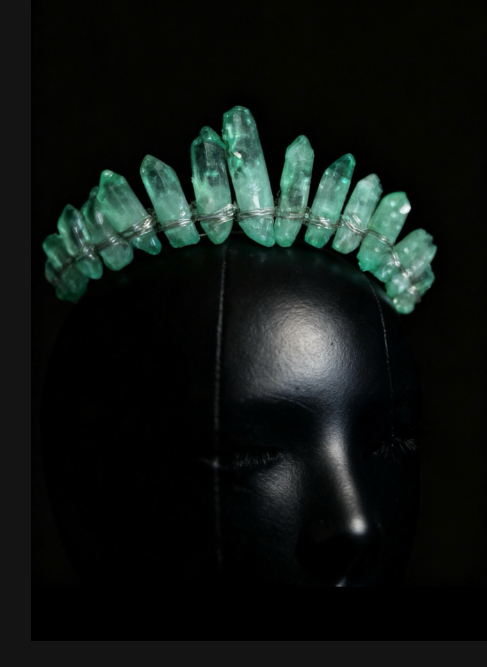 Hair-down pick
Quartz Crystal Tiaras
Set on a finely wrought metal headband, with quartz-style hues that catch light from the inside of the stone. The headband form sits flatter and pairs comfortably with hair worn down.
How each material pairs with your dress fabric
Tiara material and dress fabric are partners. Pick the wrong pairing and the tiara either overpowers the gown or gets lost in it.
- Lace gown: pearl wins, the soft texture of pearl echoes the soft texture of lace
- Mikado or duchess satin: crystal wins, the sharp shine of satin needs an equal sparkle partner
- Tulle and chiffon: pearl or quartz, the delicate fabric pairs with delicate light, not flashbulbs
- Silk crepe: quartz wins, both materials read soft and modern without being matchy
- Beaded or sequined gown: pearl wins, do not double up on sparkle, balance the look
- Brocade or jacquard: crystal wins, structured fabrics need a structured highlight
- Silk charmeuse: any of the three, the fabric is neutral enough to take what you give it
The metal of the tiara setting matters too. Silver and platinum-tone settings cool the look down and pair best with cool-toned skin and white-white dresses. Gold and rose gold settings warm the look up and pair best with warm undertones and ivory or champagne gowns.
What real royal brides have actually worn
Royal weddings are the original tiara reference library. The pieces are nearly always inherited or borrowed family jewels, but the materials reveal a clear pattern.
- Kate Middleton wore the Cartier Halo Tiara in 2011, set with 739 brilliant and 149 baton diamonds in platinum (Newsweek, Royal Wedding Tiaras)
- Meghan Markle wore Queen Mary's Diamond Bandeau in 2018, an Art Deco style in platinum and diamonds
- Princess Eugenie wore the Greville Emerald Kokoshnik Tiara, a colored-stone statement piece
- Most heritage royal pieces use real diamonds rather than crystal, set in platinum or gold, with pearls used historically for second-tier ceremonial wear
The takeaway for non-royal brides is not to chase diamond, it is to chase silhouette. The Cartier Halo silhouette has become an entire category of crystal tiaras you can buy under one hundred dollars. The Art Deco bandeau has become its own bridal subcategory. Pick the silhouette of the royal piece you love and you have a clear material brief: pearls for soft, crystal for diamond-style sparkle, quartz for depth.
Heritage silhouetteRenaissance Tiaras
Antiqued metalwork with crystal-cut stones, the closest RSC silhouette to a heritage Art Deco bandeau. Built with proper fastening loops so a salon stylist can pin it for a four-hour reception.
How to clean and care for each material
Each material has its own rule book. Mix them up and you can dull a tiara in one cleaning session.
- Pearl: wipe with a soft dry microfiber cloth only, never submerge, never use chemical jewelry cleaner (A Crown Affaire, Tiara Care)
- Crystal: clean rhinestones with a microfiber cloth and rubbing alcohol on a Q-tip for grout lines, never fully submerge, never use ultrasonic cleaners
- Quartz: same as crystal, plus avoid sudden temperature changes that can shock the stone
- Metal setting: lay on foil shiny-side-up, cover with boiling water and two tablespoons baking soda, soak thirty minutes for tarnish, then rinse and pat dry
- All tiaras: store flat in the original box, never tossed in a jewelry drawer where stones can chip
- Skip the wedding-day perfume zone, mist behind your ears and on your wrists, never near the headpiece
- Remove the tiara before any post-reception champagne toast, sticky residue is the enemy of pearls
- Have a small repair kit on the day, two spare hairpins, a clean microfiber, and clear nail polish for the rare loose stone
Quiz: which tiara material fits you?
Picture your wedding portrait. What feels right?
Frequently asked questions
Quick Answers
Which is more durable, pearl or crystal?
Are quartz tiaras real stone?
What is the difference between Swarovski and regular crystal?
Can you mix pearl and crystal in one tiara?
How much should a real bridal tiara cost?
What tiara material did Kate Middleton wear?
“Beautiful tiaras! Sweetest seller! Thank you!”
Pieces for every aesthetic
Four pieces, three materials
Crystal, quartz, and antiqued silhouettes for every wedding aesthetic
/listings%2F0-6e5db9e3-f6c5-4ead-9f92-bb2cd402ce6e-53d12cc0-fa48-4fb6-8270-3fda7cbc2525.jpeg)
Whether you are a bride-to-be, a bridesmaid in waiting, or just a queen who wants a real-stone piece for the next big moment, your perfect material is waiting. Kathy hand-picks every tiara that drops on the Whatnot lives, and every piece ships free, right to your castle door. Browse the full collection and find the one that matches your light.